- Home
- Printable Brain Games
- Benefits of Brain Games for Seniors
Benefits Of Brain Games For Seniors
When I talk about the benefits of brain games for seniors, I’m not talking about vague activities meant to pass the time. I’m talking about structured games that give your mind something specific to work on. The kind of mental work that research shows supports memory, focus, and overall cognitive function as we age.
Printable brain games make these benefits accessible at home. They’re easy to use, affordable, and flexible enough to fit into everyday life, while still keeping your mind engaged in ways that actually make a difference.

Benefits of brain games for seniors using printable games:
Printable games provide structured cognitive stimulation that supports memory and attention.
If you’re interested in keeping your mind active, this is one practical way to use structured activities that actually have research behind them. Whether you enjoy learning new things, solving problems, or simply staying mentally entertained at home, this page explains what brain games do and why consistency matters.
They’re not about perfection or speed. They’re about giving the brain regular, meaningful work.
The Science Behind the Benefits of Brain Games for Seniors
The benefits of brain games for seniors do not come from quick tricks or one time use. They come from regular mental engagement that asks the brain to pay attention, recall information, and think in new ways.
Research on aging and cognition shows that the brain continues to respond to challenge. What matters most is choosing activities that are engaging enough to return to often.
That is where well designed brain games come in.
Why Brain Games Support Memory and Focus
Here are six core benefits supported by research and practical use.
1. Improves Memory and Recall
Many brain games ask you to remember words, facts, patterns, or sequences. Each time you retrieve information, you strengthen the pathways involved in memory.
Trivia games, word puzzles, and recall challenges use the same mental skills you rely on in daily life, such as remembering details, following conversations, and holding onto new information.
If memory is what you want to work on most, you can start here:
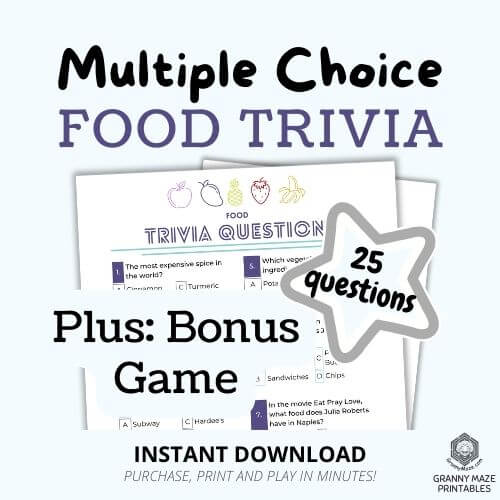
>> Printable memory and trivia brain games
2. Enhances Focus and Attention
Brain games often require sustained attention, visual scanning, and simple decision making. Over time, this kind of practice supports better focus.
Stronger attention makes everyday activities feel easier, whether that is reading, completing tasks, or staying mentally present during conversations.
You will find many games built around this skill here:
>> Focus and concentration printable games
3. Provides Ongoing Mental Stimulation
Mental stimulation is not something to outgrow. It is something to maintain.
Brain games provide structured mental activity that challenges the mind without overwhelming it. Used regularly, they help keep thinking flexible.
Printable games work especially well here because they are easy to repeat and easy to return to.
Research has linked consistent mental stimulation with:
- Slower rates of cognitive decline
- Better executive function
- Improved mental flexibility
This is one reason brain games are frequently recommended as part of an active aging routine.
4. Supports Problem Solving and Thinking Skills
Logic based games, reasoning challenges, and pattern activities support skills like planning, organizing, and problem-solving.
These are the thinking skills used in everyday decisions, and they continue to respond to use later in life.
If you enjoy puzzles that make you think things through, take a look at:
>> Logic and problem-solving brain games
5. Encourages Conversation and Social Play
When brain games are shared with others, they naturally invite conversation.
Talking through answers, solving problems together, or laughing at mistakes adds another layer of mental activity. Combining thinking with social interaction helps information stick.
Many printable games work just as well for one person as they do for a small group.
6. Reduces Stress While Supporting Consistency
Enjoyable brain games offer focused mental activity that can reduce stress and mental fatigue.
Lower stress supports clearer thinking and makes it easier to return to an activity regularly. Consistency matters more than difficulty when it comes to long-term benefit.
That is why approachable games are often the ones people keep using.
If you’d like to play printable brain games designed around these benefits, you can see the collection here.
How Laughter Supports Learning
Laughter does more than lighten the mood. It plays a role in how the brain takes in information.
When you laugh, your brain releases chemicals (dopamine and serotonin) tied to attention, retention and motivation. These responses make the brain more receptive to learning, so it's easier to stay engaged and remember what you are working on.
Humor based brain games, such as funny true or false questions or playful trivia, mix learning with curiosity. Topics often include everyday facts, history, food, science, or the human body, presented in a relaxed way.
Experts agree that mental stimulation combined with laughter’s stress-reducing effects can boost memory, slow cognitive decline, and help form new neural pathways. It’s serious brain work, delivered in a way that feels enjoyable rather than clinical.
If you like learning without it feeling heavy, you might enjoy:
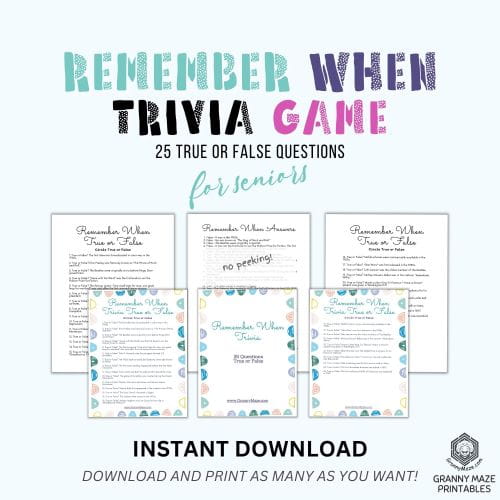
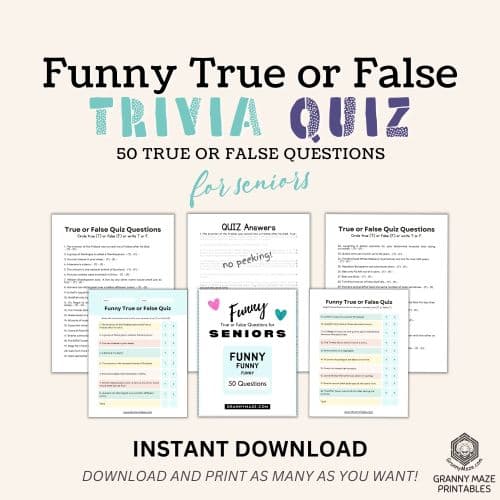
>> Funny true or false and trivia games
Why Printable Brain Games Work Especially Well
Printable brain games have several advantages that make them easy to stick with.
- No screens
- Play at your own pace
- They can be reused
- They're ready when you are
That simplicity removes barriers and makes regular use more likely.

What Research Shows About Brain Games and Aging
Research in this area continues to grow.
Studies have found that structured cognitive activities can support memory, attention, and thinking skills in older adults. Other research shows improvements in working memory and task switching when brain games are used consistently.
Some findings suggest that mental training is linked to changes in areas of the brain involved in learning and memory. Aging continues, but the brain remains responsive.
One point shows up again and again. Activities that feel interesting rather than clinical are used more often, and regular use is what supports lasting benefit.
Specific Studies
Scientific research in this field has substantiated the cognitive benefits of brain games for seniors. One study found that crossword puzzles may help slow the progress of mild dementia. [1]
A 2019 study involving seniors participating in structured brain games reported improvements in working memory and executive function, including better task-switching and information processing. These skills are directly involved in everyday activities such as planning, reasoning, and decision-making.
Additional findings suggest that cognitive training activities may be linked to changes in brain structure, including preserved or increased gray matter volume in regions associated with memory and learning. While this does not stop aging, it supports the brain’s ability to adapt and function more efficiently. [2]
A 2020 review examining serious games in individuals with early to middle stages of dementia found improvements across multiple cognitive areas, including:
- Short-term memory
- Reaction time
- Problem-solving ability
- Logical reasoning
- Communication skills
These findings reinforce an important point: the brain remains responsive to stimulation, even later in life.
What matters most is consistency. Brain games that feel engaging rather than clinical are more likely to be used regularly, and repeated engagement is what supports memory, attention, and cognitive resilience over time. [2]
If you’re interested in trying games built around this research, you’ll find them in the printable games store.
Putting the Benefits of Brain Games for Seniors into Practice
Not all brain games work the same way, and that’s a good thing. Different games challenge different thinking skills, which is why variety matters.
Some people enjoy memory and recall games. Others prefer trivia or true-or-false games that mix learning with curiosity and humor. There are also logic and number challenges for more structured thinkers, along with word games that support attention and language skills.
Choosing games that match how you naturally think makes it easier to stay motivated. When an activity feels satisfying rather than frustrating, the brain stays involved longer, and that is when regular mental stimulation does its best work.
Brain games are not a promise or a cure. What they offer is a practical way to give your mind regular, meaningful work that fits into everyday life. Used consistently, they support attention, memory, and mental engagement without stress or pressure.
I created a collection of printable brain games for seniors with this in mind. They are designed to be clear, approachable, and interesting to play. You can use them at your own pace, on your own or with others, and return to them as often as you like.
You can see the full collection here:
HOME | PRIVACY POLICY | TERMs of use | REFUND POLICY | CONTACT | SITEMAP
Copyright © 2023- | GRANNYMAZE.COM | ALL RIGHTS RESERVED regardless of links or attributions